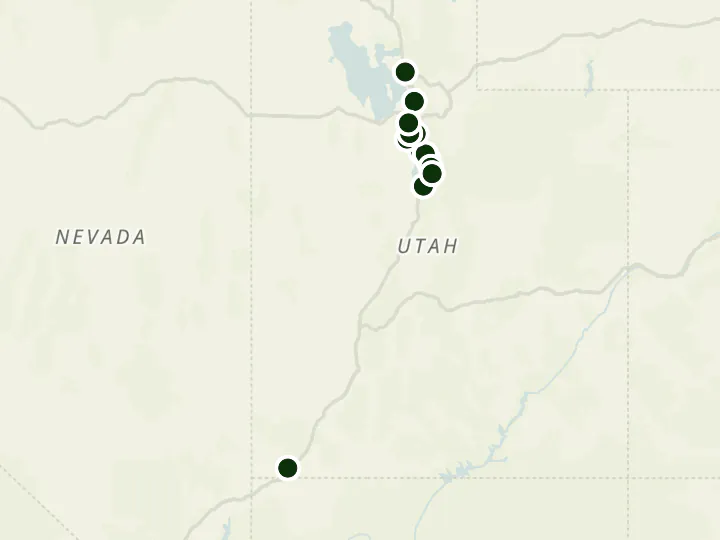
Security Service Federal Credit Union has 13 branches in Utah, 10 of them open on Saturday. Anyone in Utah can qualify to join through one of its membership routes.
Members, assets and founding year from NCUA data as of June 2026.
01 / Membership
Who can join
Anyone who lives, works, worships, attends school or volunteers in Texas, Colorado or Utah (or whose business is there) can join, as can select military members and Defense Department employees and family or household members of members.
Ways to qualify:
Live, work, worship, attend school, volunteer, or have a business located in Texas, Colorado or Utah
Members of select military branches or units, or Department of Defense employees at specific bases in its service areas
Family members (spouse, child, sibling, parent, grandparent, grandchild, step and adoptive) of a member
Household members who share a residence and economic unit with a member
Self-service coin counters at many Texas, Utah and Colorado locations; the receipt is used for cash back or a deposit. Utah branch pages list a coin counter at every branch except Sandy.
The page gives only the range: sizes from 2x5 to 10x20 and annual fees from $20 for smaller boxes to $100 for larger boxes; sizes in between and their fees are not listed. $20 to replace a lost key. Certain sizes are not available at all locations; call 1-800-527-7328 to check availability. Utah list: American Fork, Orem, Pleasant Grove, Provo, Riverdale, Riverton, St. George, Sandy, Springville, South Jordan, Westwood (not Bountiful or Payson).
The site calls it 'Signature Guarantee Service'. Every Utah branch page lists 'Signature guarantee' under Branch Services; Orem and South Jordan say up to $100K.
Conditions
Free; certifies your signature for transfers of securities such as stocks or bonds up to $100,000. $250,000 guarantees only at limited locations (call 1.888.415.7878).
“Free Signature Guarantee Service This member benefit certifies your signature when you transfer securities”
We read each bank's and credit union's own website and record what it says, with a link to the exact page and the date we checked it. Membership numbers, assets and founding years come from the federal agencies that insure deposits: the NCUA for credit unions and the FDIC for banks.
"Not listed on their site" means we did not find an answer on their website. It does not mean the service is unavailable: ask the bank or credit union.